Your pool pump works hard every day to keep your water clean and clear. When it starts to fail, it’s time for a pool pump repair! You might notice weak water flow, strange noises, or cloudy water that won’t clear up no matter how much you clean.
The key warning signs include reduced water circulation, unusual sounds from the motor, frequent tripping of electrical breakers, and visible leaks around the pump housing. Catching these problems early can save you hundreds of dollars in repairs and prevent your pool from becoming unusable during peak swimming season.
In this article, we’ll walk you through how to identify pump problems, decide between repair and replacement, and understand what professional fixes cost. You’ll also learn how long pumps typically last and when it makes sense to invest in a new one versus fixing your current system.
Let’s break down the key points you should consider when deciding between pump repair or replacement:
- How to know if your pool pump is failing
- Fixing a pool pump: Repair or replace?
- How swimming pool pump repair works
- How long does a pool pump really last?
- Pool pump repair cost and value breakdown
By the end of this reading, you’ll know how to diagnose and solve common pool pump problems before they become costly.
How to know if your pool pump is failing
Pool pumps show clear warning signs when they start to fail. We can spot these problems by watching for strange sounds, checking water flow, and monitoring our energy bills.
Unusual noises, leaks, or loss of suction
Strange sounds from your pump motor signal trouble. We should listen for:
- Grinding or screeching noises
- Loud humming without water movement
- Rattling or vibrating sounds
These pump noises often mean worn bearings or damaged parts inside the motor.
Visible leaks around the pump housing indicate seal problems. We can check for:
- Water pooling under the pump
- Wet spots on the pump body
- Dripping from connections
Loss of suction happens when the pump can’t pull water properly. Signs include:
- Difficulty priming the pump
- Air bubbles in the system
- Weak flow from return jets
Poor suction often comes from damaged impellers or worn gaskets. We should also check if the pump loses its prime frequently.
When poor circulation affects water clarity
Weak water flow shows our pump is struggling. We notice this when:
- Return jets have little pressure
- Water barely moves in the pool
- Skimmers don’t pull debris effectively
Poor pool circulation leads to dirty water fast. Without proper water movement, debris settles on the bottom.
Cloudy water develops when the pump can’t filter properly. We see:
- Algae growth in corners
- Floating particles that won’t clear
- Green or milky water color
The pump needs to move water through the filter system. When circulation fails, chemicals don’t mix well and filtration stops working.
Dead spots form where water doesn’t move. These areas become breeding grounds for bacteria and algae.
What a sudden rise in energy use can mean
Higher electric bills often signal pump problems. We should watch for:
- Bills that jump 20% or more
- Steady increases over several months
- Unusually high summer costs
Failing pumps work harder to move water. This extra effort uses more electricity.
Motor strain causes increased energy use. Common problems include:
- Clogged impellers making the motor work harder
- Worn bearings creating friction
- Old single-speed pumps running inefficiently
Running longer cycles to maintain water quality also raises energy costs. When our pump can’t circulate water properly, we run it more hours to compensate.
Older pumps naturally use more energy as they wear out. A pump that’s 8-10 years old may need replacement to reduce energy use.
Fixing a pool pump: Repair or replace?
The decision between pool pump repair and replacement depends on the pump’s age, repair costs, and overall condition. We evaluate each situation based on cost-effectiveness and long-term reliability to help you make the best choice.
Is It worth repairing a pool pump?
Pool pump repair is often the best option when the pump is relatively new and the issue is minor. We typically recommend repairs for pumps under five years old with problems like clogged impellers or worn seals.
Most cost-effective repairs include:
- Replacing worn seals and gaskets
- Fixing motor bearings
- Clearing blocked impellers
- Repairing electrical connections
The repair makes financial sense when costs stay under 50% of a new pump’s price. For example, if a new pump costs $800, repairs should cost less than $400.
Simple mechanical issues often require only basic parts and labor. We can usually fix these problems quickly without major expense.
However, we don’t recommend repairs for pumps over eight years old with major motor problems. These repairs often cost more than half the replacement price and may fail again soon.
When to consider pool pump replacement instead
Pool pump replacement becomes necessary when repair costs exceed replacement value or when the pump repeatedly fails. We recommend replacement for pumps over ten years old or those requiring major motor work.
Key replacement indicators:
- Repair costs over 60% of new pump price
- Multiple repairs within two years
- Pump age exceeding manufacturer warranty period
- Frequent overheating or electrical issues
Energy efficiency also drives replacement decisions. According to the EPA, Modern variable-speed pumps reduce energy use by 60–75% over single-speed models and cut annual electric costs by $290–445, making replacement a smarter long‑term investment.
Upgrading to ENERGY STAR certified pool pumps can save homeowners $290–$445 in energy bills annually and $1,500–$2,200 over the product’s lifetime, while reducing strain on filtration systems—making timely repair or upgrade essential.
We also recommend replacement when the pump no longer meets your pool’s circulation needs. Pool additions or equipment upgrades may require more powerful pumps than repairs can provide.
How Little Dipper evaluates repair viability
We recommend a systematic approach to determine whether pool pump repair or replacement offers the best value. The evaluation process must consider multiple factors beyond simple repair costs.
Essential evaluation checklist:
- Pump age and maintenance history
- Current repair estimate vs. replacement cost
- Energy efficiency comparison
- Frequency of recent service calls
The contractor should inspect the motor, impeller, and housing for wear patterns. Excessive corrosion or multiple component failures usually indicate replacement is more practical.
They also must consider your pool’s specific needs. We may recommend upgrading to variable speed pumps even when repairs are possible to improve long-term efficiency.
Ask to provide written estimates for both options with projected costs over the next three years. This helps you make informed decisions based on total ownership costs rather than just immediate expenses.
How swimming pool pump repair works
Pool pump repair focuses on three main problem areas: the motor, seals, and impeller. Most repairs can fix these issues, but some motor problems need full replacement.
Diagnosing motor, seals, and impeller issues
Start by checking the motor for unusual sounds or vibrations. A humming motor that won’t start often means bad capacitors. Grinding noises point to worn bearings.
Motor warning signs:
- Humming without starting
- Grinding or squealing sounds
- Overheating or frequent shutdowns
- Burning smell
Next, examine the seals around the motor shaft. Water leaks near the motor housing show seal failure. Also check O-rings and gaskets for cracks or wear.
The impeller moves water through the system. Remove the pump basket to inspect it. Clogged or damaged impeller blades reduce water flow. Hair, leaves, and debris often wrap around the impeller.
Common impeller problems:
- Debris blockage
- Cracked or broken blades
- Loose impeller assembly
Can a pool pump motor be repaired?
Pool pump motors can be repaired in many cases. You can replace capacitors, bearings, and seals without buying a new motor. These repairs cost much less than full replacement.
Repairable motor issues:
- Failed start or run capacitors
- Worn shaft seals
- Bad bearings
- Loose connections
However, some motor problems require replacement. Burned windings cannot be fixed cost-effectively. Cracked motor housings also need new motors.
Motors over 10 years old often cost more to repair than replace. We compare repair costs to new motor prices. Energy-efficient motors may save money long-term even if repairs are possible.
What to expect during a service visit
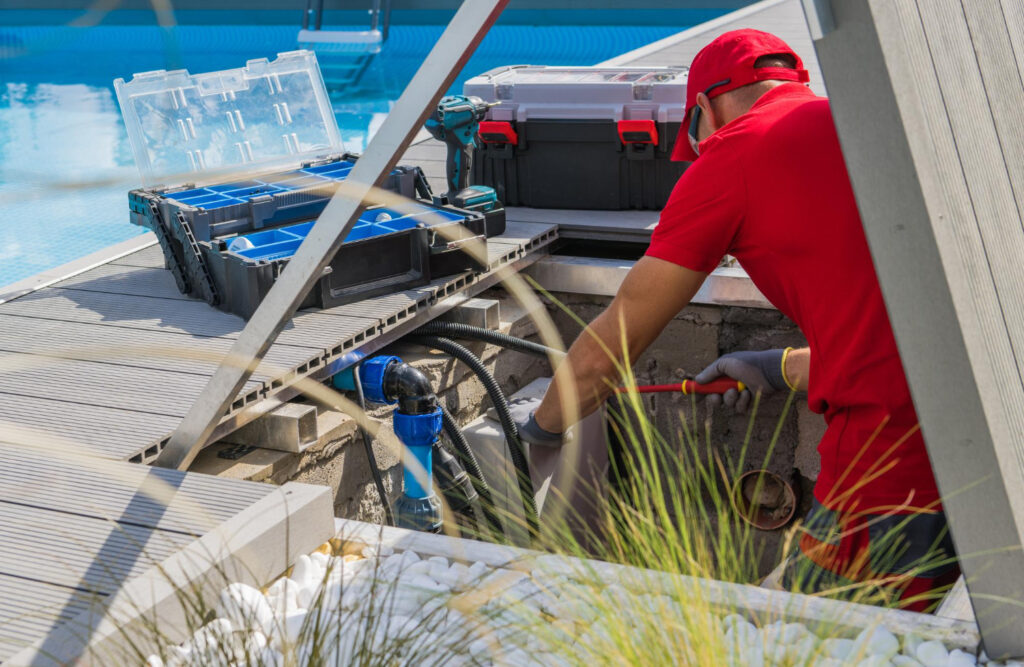
The technician arrives with common repair parts and diagnostic tools. He starts by testing the motor with a multimeter. This shows electrical problems quickly.
Service visit steps:
- Visual inspection of pump and motor
- Electrical testing with multimeter
- Remove pump basket and housing
- Check impeller and seals
- Test motor capacitors and windings
Contractors must explain all problems found before starting repairs. Most repairs take 1-2 hours on-site. Make sure he carries replacement seals, gaskets, and capacitors on their truck.
If special parts are needed, the contractor must order them and return within 2-3 days. Make sure they test the pump thoroughly after repairs. You’ll see proper water flow and quiet operation when we finish.
How long does a pool pump really last?
Most pool pumps last 8 to 12 years with proper care. Your pump’s actual lifespan depends on how often you use it and how well you maintain it.
What is the life expectancy of a pool pump?
A well-maintained pool pump typically lasts 8 to 12 years. This range applies to most standard single-speed and variable-speed pumps.
High-quality pumps from trusted brands often reach the upper end of this range. Cheaper pumps may need replacement closer to 8 years.
Factors that affect lifespan:
- Build quality and materials
- Motor type and design
- Environmental conditions
- Installation quality
Pool pumps in harsh climates face more stress. Extreme heat, cold, and humidity can shorten pump life.
Above-ground pool pumps may last slightly less than in-ground models. They often use smaller motors that work harder to move water.
How usage and maintenance impact longevity
Heavy usage significantly reduces pump lifespan. Pumps running 24/7 wear out faster than those with proper scheduling.
Maintenance tasks that extend life:
- Clean pump baskets weekly
- Check and clean impellers monthly
- Inspect seals and gaskets regularly
- Maintain proper water chemistry
Poor water chemistry damages pump components. High chlorine levels corrode metal parts. Low pH levels eat away at seals and gaskets.
Clogged filters force pumps to work harder. This extra strain shortens motor life and increases energy costs.
Regular professional inspections catch problems early. Small repairs prevent major failures that require full replacement.
Upgrading to high-efficiency models when needed
Variable-speed pumps last longer than single-speed models. They run at lower speeds most of the time, reducing wear on motor parts.
Benefits of high-efficiency pumps:
- Lower energy costs
- Quieter operation
- Better filtration
- Longer lifespan
We recommend upgrading when your current pump reaches 6-8 years old. This timing prevents unexpected failures during peak season.
High-efficiency models cost more upfront but save money long-term. Energy savings often pay for the upgrade within 2-3 years.
Modern pumps include smart features like programmable timers and diagnostic systems. These help optimize performance and catch issues early.
Pool pump repair cost and value breakdown
Pool pump repair costs range from $150 to $800 depending on the problem and parts needed. Professional labor, part availability, and repair urgency all affect your final bill.
How much does it cost to repair a pool pump?
Most pool pump repairs cost between $200 and $500 for common issues. Simple fixes like replacing seals or gaskets run $150 to $250.
Motor repairs typically cost $300 to $600. Impeller replacements range from $200 to $400 depending on pump size.
Common Repair Costs:
- Seal replacement: $150-$250
- Motor repair: $300-$600
- Impeller replacement: $200-$400
- Electrical issues: $250-$500
We recommend the 60-75% rule when deciding on repairs. If repair costs exceed 75% of a new pump’s price, replacement makes more sense.
Key price factors: Parts, labor, and urgency
Labor costs vary by location but typically run $75 to $150 per hour. Most repairs take 2-4 hours to complete.
Parts availability affects pricing significantly. Common components cost less than specialty parts for older pumps.
Factors That Increase Costs:
- Emergency or weekend service calls
- Hard-to-find replacement parts
- Multiple component failures
- Pool accessibility issues
Urgency adds 25-50% to standard rates. Planning repairs during off-season saves money on both parts and labor.
How expert repair extends system performance
Professional repairs include proper diagnosis and quality parts installation. We see DIY repairs fail 40% more often than professional work.
Expert technicians identify underlying issues that cause pump failures. They replace worn components before they break completely.
Benefits of Professional Repair:
- Warranty coverage on parts and labor
- Proper system balancing
- Prevention of future problems
- Longer pump lifespan
Professional repairs typically extend pump life by 2-3 years. This saves more money than the initial repair cost through improved efficiency and fewer breakdowns.
Conclusion
We’ve covered the main signs that show your pool pump needs repair. Acting fast when you notice these problems can save money and prevent bigger issues.
Pool pumps are crucial for keeping water clean and safe. When they fail, your pool can become unsafe to swim in.
We recommend checking your pump monthly for these issues. Early detection helps avoid costly repairs or full replacement.
Simple fixes like cleaning debris or checking electrical connections can solve many problems. However, motor failure or major leaks usually need professional help.
Remember that regular maintenance prevents most pump failures. This includes cleaning the filter, checking for clogs, and ensuring proper water levels.
If multiple problems happen at once, replacement might be better than repair. We suggest getting quotes from local pool professionals to compare costs.
Don’t ignore warning signs. A failing pump can damage your entire pool system if left untreated. Quick action protects your investment and keeps your pool ready for swimming season.
Most pump issues are fixable when caught early. We encourage pool owners to learn these signs and take action promptly when problems arise.
Schedule your pool pump repair with reliable contractors in your area to restore proper circulation, prevent costly damage, and keep your pool swim-ready all season.